
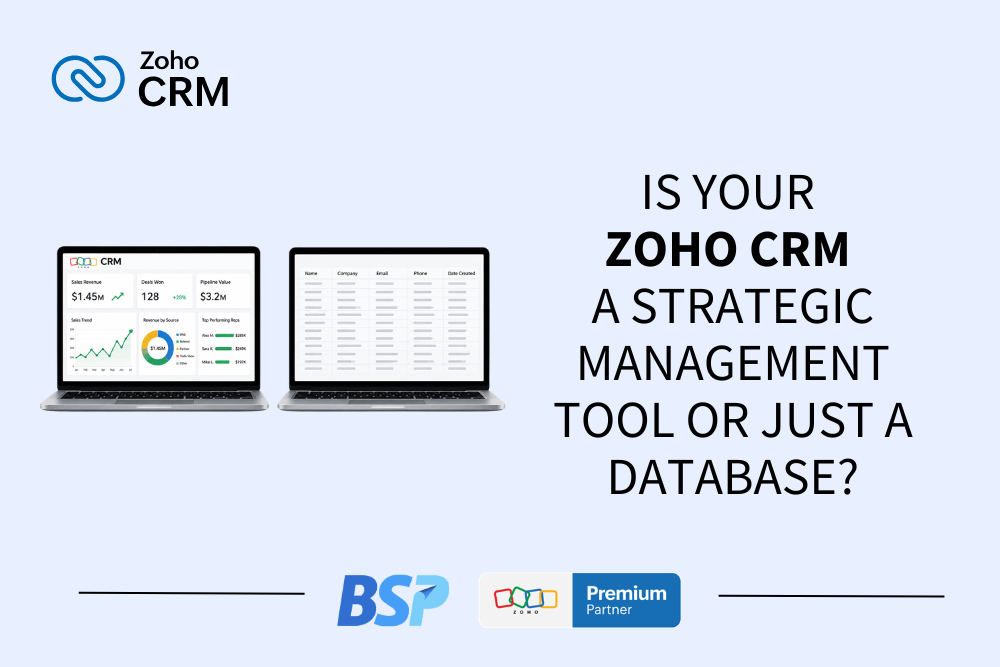
Many organizations invest significant time and resources in implementing a CRM system, only to discover months later that the data within no longer reflects reality.
Opportunities remain open long after conversations have stopped. Forecasts appear healthy on paper but fail to materialize. Sales teams spend time maintaining records, yet leadership still struggles to gain a clear view of pipeline health.
We see this challenge unfold across organizations constantly: a Zoho CRM pipeline shows dozens of opportunities marked as active, but a closer look reveals many haven’t been touched in months. The result? Inflated forecasts, missed follow-ups, and leadership teams completely losing confidence in their data.
The issue was not the CRM. In fact, the platform was accurately reflecting the information it had been given. The challenge was the absence of a structured review process to ensure the data remained current, reliable, and actionable.
After implementing a disciplined review cycle, the organization transformed the quality of its pipeline, forecasts, and sales conversations. Here’s what they learned and how your team can apply the same principles.
Why CRM Reviews Are Often Overlooked
Most teams focus on entering information into their CRM. Far fewer dedicate time to reviewing and maintaining that information.
Over time, inactive opportunities remain open, incomplete records accumulate, and reporting becomes less reliable. When that happens, teams begin to question the accuracy of the system itself.
A CRM is designed to provide clarity, but its effectiveness depends on the quality of the data and processes behind it.
Regular reviews help ensure that the information guiding your business decisions remains current, accurate, and actionable. The difference is similar to navigating with an up-to-date map versus navigating blind.
Six Benefits of a Structured CRM Review Process
1. A Reliable and Actionable Pipeline
When opportunities are routinely reviewed, outdated or inactive deals are removed from the pipeline.
The result is a sales pipeline that accurately reflects current opportunities and allows teams to focus on genuine revenue potential rather than “ghost deals.”
2. More Accurate Sales Forecasts
Forecasting depends heavily on the quality of the data behind it.
By regularly validating opportunities and removing stalled deals, organizations often find that their projected revenue aligns much more closely with actual results.
3. Better Allocation of Sales Effort
Not every opportunity deserves the same level of attention.
With qualification criteria and scoring mechanisms in place, sales teams can prioritize opportunities with the highest likelihood of success and spend less time chasing low-value prospects.
4. Stronger Alignment Between Sales and Management
Pipeline reviews become strategic discussions rather than reporting exercises.
Instead of debating the accuracy of the data, managers and sales representatives can focus on decisions, obstacles, and next steps.
5. Earlier Detection of Risk
A deal that has shown no activity for several weeks may be signaling a larger problem.
Zoho CRM can identify stalled opportunities through workflows and reporting, allowing teams to intervene before an opportunity is lost completely.
6. A Culture of Data Quality
When teams understand that CRM data is reviewed regularly, they naturally become more diligent about maintaining accurate records.
Over time, data quality improves across the organization, leading to better reporting and more confident decision-making.
How to Implement a CRM Review Process in Zoho CRM
A successful review process combines structure, automation, and consistent team habits.
Phase 1: Build the Foundation
Define Qualification Standards
Establish clear criteria that opportunities must meet before progressing through the pipeline.
Many organizations use the BANT framework:
- Budget: Does the prospect have funding allocated?
- Authority: Are you working with the decision-maker?
- Need: Is there a clear business challenge to solve?
- Timeline: Is there a realistic timeframe for implementation?
These criteria can be configured as mandatory fields within Zoho CRM to ensure consistent qualification.
Create Validation Rules
Zoho CRM validation rules help prevent incomplete records from advancing through the sales process.
For example, fields such as:
- Next action date
- Estimated deal value
- Decision-maker information
- Opportunity close date
can be required before a deal moves to the next stage.
Standardize Pipeline Stages
Complex or ambiguous pipelines often create confusion.
Review your stages and eliminate unnecessary statuses. Each stage should have a clear definition and documented criteria for progression.
Phase 2: Automate the Review Process
Set Up Activity Alerts
Automation can help identify opportunities that require attention.
For example, create workflows that trigger notifications when a deal has not been updated within a defined number of days.
These alerts help sales representatives address inactivity before opportunities become stale.
Build a Data Freshness Dashboard
Visibility is essential.
Using Zoho Analytics, create dashboards that track:
- Opportunities updated this week
- Deals with no recent activity
- Pipeline age by stage
- Forecast accuracy trends
Providing real-time visibility makes it easier to identify issues before they impact performance.
Phase 3: Establish Team Review Rituals
Technology alone is not enough.
Organizations that maintain high-quality CRM data typically establish recurring review sessions.
Weekly, Monthly, and Quarterly Pipeline Reviews
Short, focused meetings can have a significant impact.
Rather than reviewing every opportunity, teams should focus on:
- High-priority deals
- Blocked opportunities
- Stalled opportunities
- Forecast risks
- Required actions
The objective is not reporting. The objective is decision-making.
The Trap to Avoid
One of the most common mistakes is assuming automation can replace accountability.
Zoho CRM can identify inactivity, surface alerts, automate follow-ups, and generate reports. However, it cannot determine whether a deal should remain active, be requalified, or be archived.
Those decisions still require human judgment.
Automation should support your review process, not replace it.
Final Thoughts
A CRM should never become an archive of outdated information.
When maintained properly, Zoho CRM becomes a living management tool that supports forecasting, prioritization, and strategic decision-making.
Ultimately, the quality of your business decisions will always be tied to the quality of your data.
If your sales forecasts feel unreliable, your pipeline seems inflated, or your team struggles to prioritize opportunities, it may be time to evaluate your CRM review process.
Need Help Optimizing Your Zoho CRM?
At BSP, we help organizations build CRM processes that improve visibility, strengthen forecasting, and support better business decisions.
Contact our team to learn how we can help you get more value from your Zoho CRM investment.


